If you've ever spent good money on anti-frizz serums, smoothing creams, and styling products - only to still end up with frizzy hair - this one's for you.
Because here's what most hair product marketing won't tell you: if frizz is already locked in by the time you start styling, no product in the world is going to fully fix it.
Frizz doesn't start when you pick up the hair dryer. It doesn't start when you apply product. It starts in the minutes immediately after you wash your hair - while it's still wet, still fragile, and still completely unprotected. And the habits most of us have in those first few minutes are quietly setting us up for a frizzy hair day before we've even thought about styling.
I tried many heat protectors and smoothing products to try and ease the frizz when I dried and styled my hair, but turns out it was happening before then, when the drying process begins.
First, Let's Talk About What Frizz Actually Is
Frizz isn't random. It has a very specific cause, and understanding it makes it a lot easier to prevent.
Each strand of hair is coated in a cuticle - think of it like the scales on a fish, or the tiles on a roof. When hair is healthy and well-moisturised, those scales lie flat and smooth, giving hair its shine and its sleek appearance. When the cuticle is raised or damaged, moisture from the air enters the hair shaft unevenly, causing individual strands to swell and expand in different directions. That's frizz.
The cuticle lifts naturally when hair is wet - which is exactly why wet hair feels different to dry hair, and exactly why the post-wash window is so critical. When hair is wet, the cuticle is already raised. Everything you do in that state either helps it lie back down smoothly, or roughens it up further.
Most of us, without realising it, are doing the latter.
The Moment Frizz Gets "Set In"
Here's the key thing to understand: frizz gets set into the hair structure while it's still wet. Once hair dries in a frizzy state — with the cuticle roughed up and uneven — it's very difficult to reverse with styling products alone. You can temporarily smooth it, but it'll fight back.
This is why people who switch to gentler post-wash habits often notice a dramatic reduction in frizz even without changing their styling products at all. They're not fighting frizz after the fact — they're preventing it from forming in the first place.
So what's causing it?
The Real Frizz Triggers (That Happen Before Styling)
Rubbing with a rough towel
This is the number one frizz culprit - and it's happening in nearly every household, every wash day. When you rub a standard bath towel over wet hair, the rough fibres snag against the raised cuticle and rough it up even further. The result is a cuticle that's disturbed and uneven, which means moisture absorption becomes uneven, which means frizz.
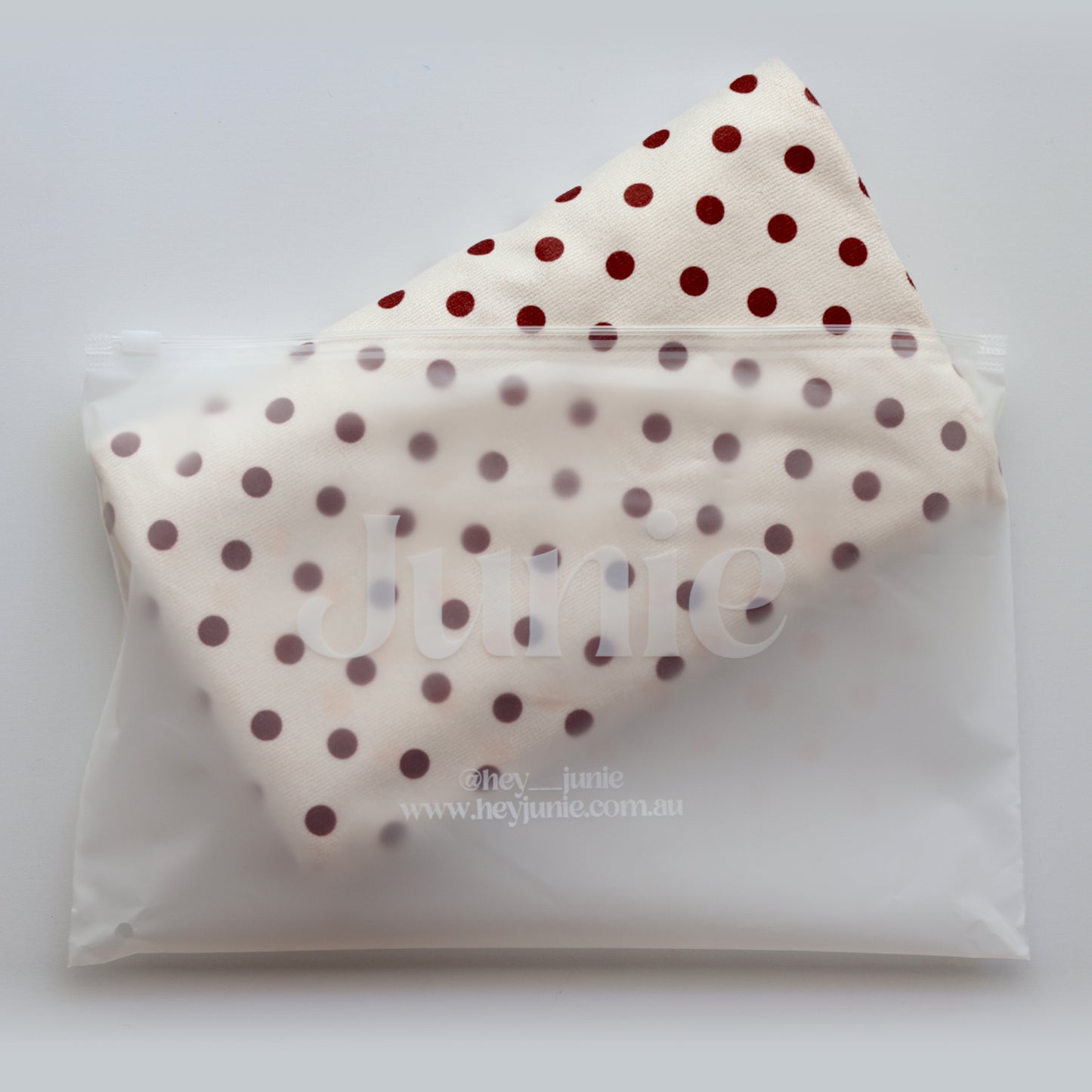
The fix is a hair towel made from genuinely fine, soft fibres that glide over the cuticle rather than roughing it up. The Junie Quick-Dry Hair Towel uses a dual-fibre blend — 82% polyester and 18% polyamide - specifically chosen because the polyamide fibres are fine enough to treat the cuticle gently while still absorbing moisture efficiently. It's a meaningful difference from standard microfibre, and your hair can feel it.
Scrunching, rubbing and over-manipulating wet hair
Any kind of rough handling of wet hair - vigorous scrunching, raking fingers through it repeatedly, rough detangling which all create friction that disturbs the hair cuticle. The less you manipulate wet hair, the better.
Humidity and moisture imbalance
If your hair is porous (which is common in colour-treated, chemically processed, or naturally dry hair types), it absorbs moisture from the air readily. This isn't something you can fully control, but you can minimise its impact by getting hair dry as quickly and gently as possible, so there's less window for atmospheric moisture to interfere.
This is another reason a quality hair towel matters: the faster it absorbs excess water, the less time the cuticle spends in that raised, vulnerable state.
Skipping leave-in conditioner or heat protectant on damp hair
Products applied to damp hair (not dry hair) are far more effective at smoothing the cuticle before it sets. If you're applying frizz-fighting products to already-dry hair, you're already too late. Apply to towel-dried, damp hair for the best results.
The Anti-Frizz Routine That Actually Works
Here's what a genuinely frizz-preventive post-wash routine looks like:
Step 1: Squeeze, don't rub The moment you step out of the shower, resist the urge to rub. Instead, gently squeeze sections of hair with your hands first to remove the initial excess water.
Step 2: Wrap in a gentle hair towel immediately Get your Junie hair towel on quickly - the sooner you're absorbing moisture with a low-friction fabric, the better. Wrap loosely but securely and leave it on for 5–10 minutes.
Step 3: Apply your products to damp hair When you take the towel off, your hair should be damp but not dripping. This is the ideal moment to apply any leave-in conditioner, curl cream, or smoothing serum. The cuticle is still slightly open and will absorb products much more effectively than on dry hair.
Step 4: Dry gently with low heat If you're blow drying, use a low to medium heat setting with a diffuser or nozzle attachment, keeping the dryer moving constantly. If you're air drying, try to avoid touching or manipulating hair while it dries and let it set in place.
Step 5: Finish cool If your blow dryer has a cool shot button, use it at the end. A blast of cool air helps close the cuticle and lock in smoothness. It takes ten seconds and makes a genuine difference.
Why This Matters More Than Any Product You'll Buy
The beauty industry makes a lot of money selling frizz-fighting products. And some of them are genuinely good. But no serum or spray can undo damage that's already been done to the cuticle during the drying process.
The most effective anti-frizz investment isn't a product - it's a habit shift. Treat wet hair gently, dry it quickly with the right fabric, apply products at the right moment, and you'll spend a lot less time and money fighting frizz after the fact.
And switching to a Junie Hair Towel is one simple swap that actually changes everything. No added steps, just a simple swap that makes a real difference - YAY!
The Simplest First Step
If you take one thing from this post, let it be this: what you dry your hair with matters more than most people realise.
Switching from a rough bath towel to the Junie Quick-Dry Hair Towel is the single fastest way to reduce the friction that sets frizz in place — and once you've made that change, everything else in your routine gets easier.
Free shipping on Australian orders $59+. Comes with a reusable wet bag. Rated 5 stars by our customers.
Enjoyed this? You might also like: